



Parasite
Antiparasitics are a class of medications which are indicated for the treatment of parasitic diseases such as nematodes, cestodes, trematodes, and infectious protozoa.
Parasite Isoform Specific Products
All Product Categories
-
Parasite Related Products (2499)
Related Products (2499)

-
Related Compound Screening Libraries (1)
-
Parasite Isoform Comparison

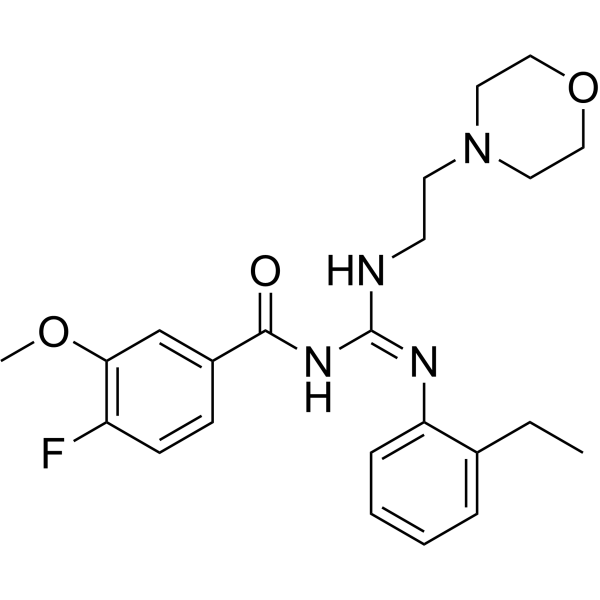
-
Fosmidomycin
 0 ImagesCat. No.: HY-134914CAS No.: 66508-53-0Fosmidomycin is an orally active antibiotic, which exhibits antimalarial activity through inhibition of 1-deoxy-D-xylulose 5-phosphate reductoisomerase (DOXP reductoisomerase). Fosmidomycin inhibits P. falciparum strains 3D7, HB3, Dd2 and A2, with IC50s of 150, 71, 170 and 150 ng/mL, respectively. Fosmidomycin exhibits synergistic effect with Clindamycin (HY-B1455), and ameliorates malaria in mouse model.
-
Daphnetin (Standard)
 0 ImagesDaphnetin (Standard) is the analytical standard of Daphnetin. This product is intended for research and analytical applications. Daphnetin (7,8-dihydroxycoumarin), one coumarin derivative can be found in plants of the Genus Daphne, is a potent, oral active protein kinase inhibitor, with IC50s of 7.67 μM, 9.33 μM and 25.01 μM for EGFR, PKA and PKC in vitro, respectively. Daphnetin triggers ROS-induced cell apoptosis and induces cytoprotective autophagy by modulating the AMPK/Akt/mTOR pathway. Daphnetin has anti-inflammation activitity and inhibits TNF-α, IL-1 , ROS, and MDA production. Daphnetin has schizontocidal activity against malaria parasites. Daphnetin can be used for rheumatoid arthritis , cancer and anti-malarian research.
-
PfFAS-II inhibitor 1
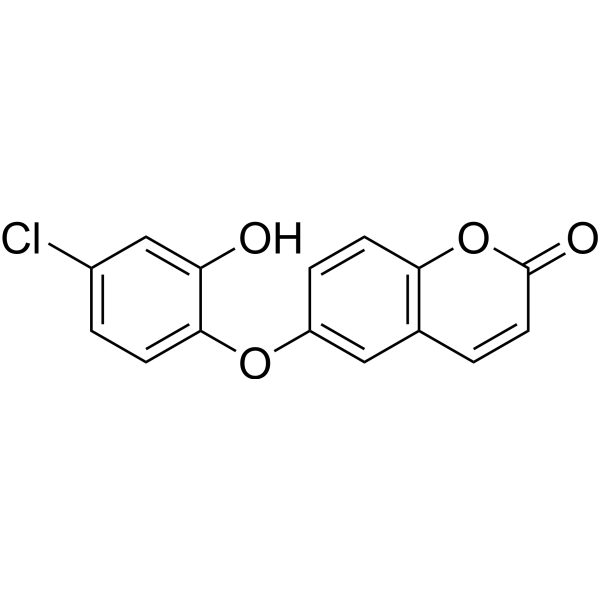 0 ImagesCat. No.: HY-160633CAS No.: 1459704-68-7PfFAS-II inhibitor 1 (Compound 3) is a Plasmodium falciparum type II fatty acid biosynthesis pathway (PfFAS-II) inhibitor, with an IC50 of 0.63 μM for PfFabI enzyme. PfFAS-II inhibitor 1 has antimalarial activity.
-
n-Butylorsellinate
 0 ImagesCat. No.: HY-N16542CAS No.: 31489-30-2N-Butylorsellinate is a butyl thicoline acid ester that can be found in fungi belonging to the Stereum genus. N-Butylorsellinate exhibits significant larvicide activity.
-
MDL 73811
 0 ImagesCat. No.: HY-112252CAS No.: 123642-27-3MDL 73811 is a potent AdoMetDC inhibitor and anti-trypanosomal compound. MDL 73811 has curative efficacy in a hemolymphatic model of HAT.
-
Cinchonine monohydrochloride hydrate
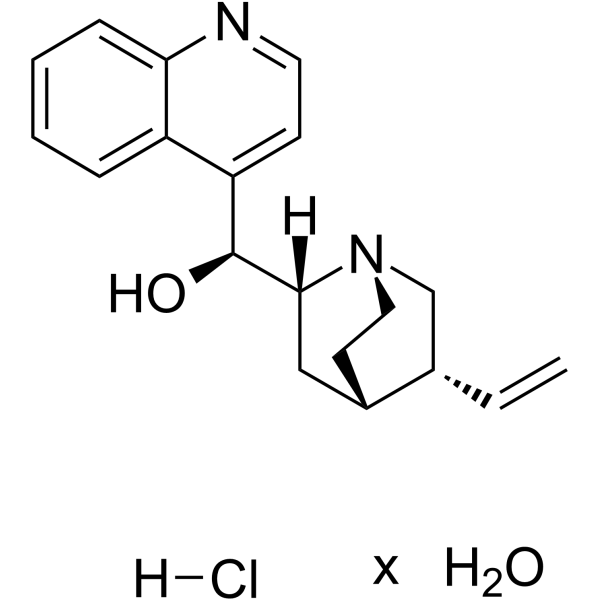 0 ImagesCat. No.: HY-Y0152ACAS No.: 206986-88-1Synonyms: (8R,9S)-Cinchonine monohydrochloride hydrate; LA40221 monohydrochloride hydrateCinchonine ((8R,9S)-Cinchonine) monohydrochloride hydrate is a natural compound which has been effectively used as antimalarial agent. Cinchonine monohydrochloride hydrate activates endoplasmic reticulum stress-induced apoptosis in human liver cancer cells. Cinchonine monohydrochloride hydrate is also an inhibitor of human platelet aggregation. Cinchonine monohydrochloride hydrate possesses a suppressive effect on adipogenesis.
-
Endoxifen (Standard)
 0 ImagesMethicillin (sodium hydrate) (Standard) is the analytical standard of Methicillin (sodium hydrate). This product is intended for research and analytical applications. Methicillin sodium hydrate is a narrow-spectrum β-lactam antibiotic, acts by inhibiting penicillin-binding proteins (PBPs). Methicillin sodium hydrate is active against Staphylococcus aureus and Staphylococcus epidermidis that are resistant to other penicillins. Methicillin sodium hydrate can be used for the research of skin infections, osteomyelitis, and endocarditis.
-
MMV674850
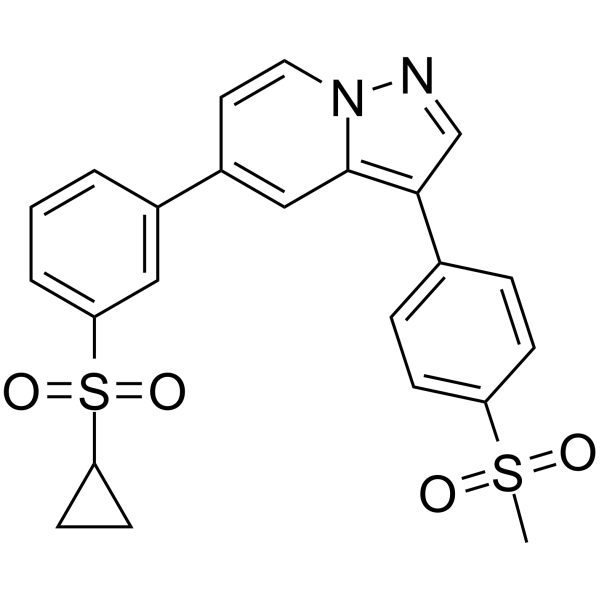 0 ImagesCat. No.: HY-141837CAS No.: 1820874-51-8MMV674850 is potent against asexual stage parasites at 2.7 and 4.5 nM and preferentially targets early-stage gametocytes (early-stage gametocyte: IC50 4.5 ± 3.6 nM; late-stage gametocyte: IC50 28.7 ± 0.2 nM).
-
HgCht2-IN-1
 0 ImagesCat. No.: HY-159080HgCht2-IN-1 (compound 1516b) is a HgCht2 inhibitor that successfully inhibits the antagonism of cyst nematodes against nitrogen-fixing rhizobia and phosphate-absorbing arbuscular mycorrhizal symbionts. HgCht2-IN-1 can be used in the study of cyst nematode antagonism against microbial symbionts.
-
Antileishmanial agent-27
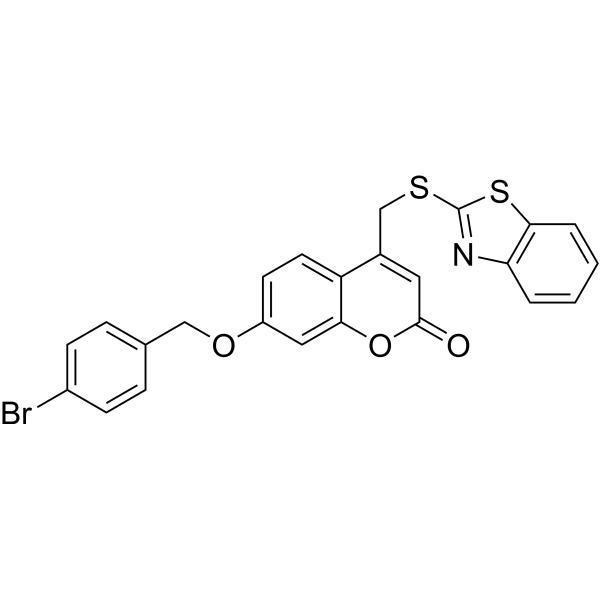 0 ImagesCat. No.: HY-163457Antileishmanial agent-27 (compound 7j) is a benzothiazolo-coumarin derivative. Antileishmanial agent-27 is a competitive inhibitor of arginyl-tRNA synthetases (ArgRSs). Antileishmanial agent-27 shows selectivity toward ArgRS of Leishmania donovani (LdArgRS) than its human counterpart (HsArgRS), with IC50 values of 1.2 and 19 μM, respectively. Antileishmanial agent-27 possesses high pharmacokinetic properties.
-
Phenothrin (Standard)
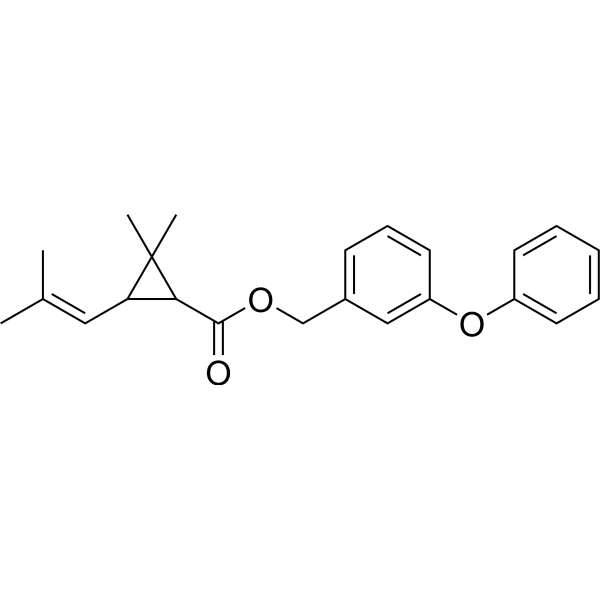 0 ImagesCat. No.: HY-B1072RCAS No.: 26002-80-2Phenothrin (Standard) is the analytical standard of Phenothrin (HY-B1072). This product is intended for research and analytical applications. Phenothrin is a Type I pyrethroid insecticide. Phenothrin induces dose-dependent DNA damage in human peripheral blood lymphocytes and hepatocytes, and exhibits definite genotoxic potential. Phenothrin acts as an insecticide for pest control in agriculture, households and public health, as well as for the elimination of human head lice infestations.
-
Antitrypanosomal agent 12
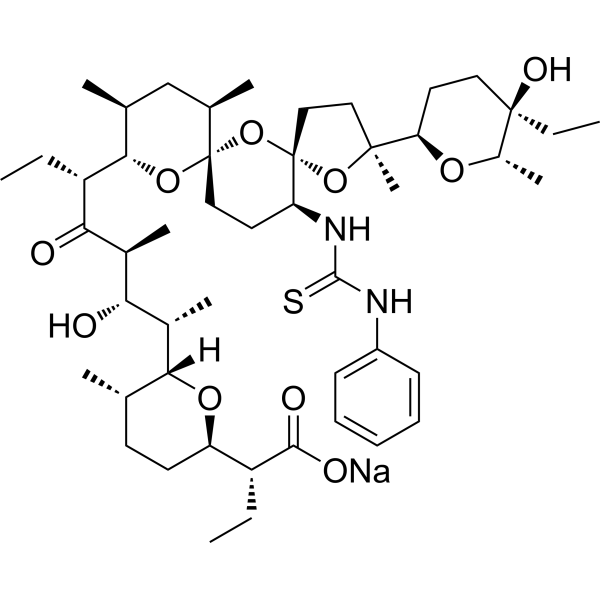 0 ImagesCat. No.: HY-149985Antitrypanosomal agent 12 is a C20-phenylthiourea with trypanocidal and cytotoxic activities. Antitrypanosomal agent 12 shows antitrypanosomal activity with 50% growth inhibition (GI50) values of 0.22 μM. Antitrypanosomal agent 12 induces faster cell swelling in bloodstream-form trypanosomes than Salinomycin (HY-15597).
-
Mebendazole-d3
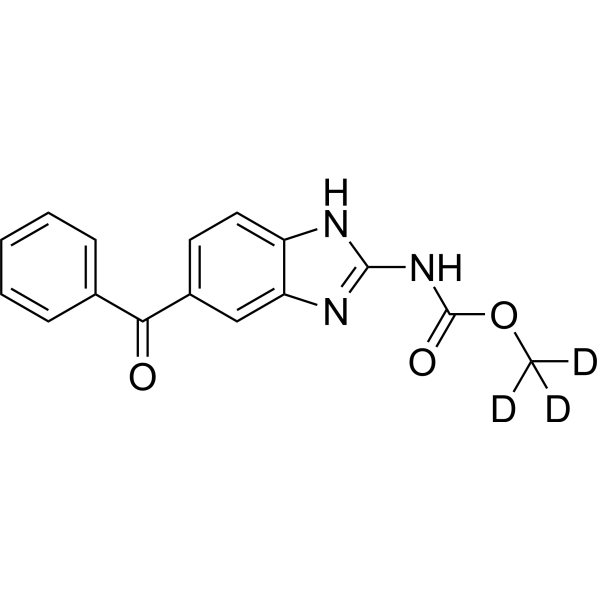 0 ImagesCat. No.: HY-17595SCAS No.: 1173021-87-8Mebendazole-d3 is the deuterium labeled Mebendazole.
-
Veratraldehyde-d3
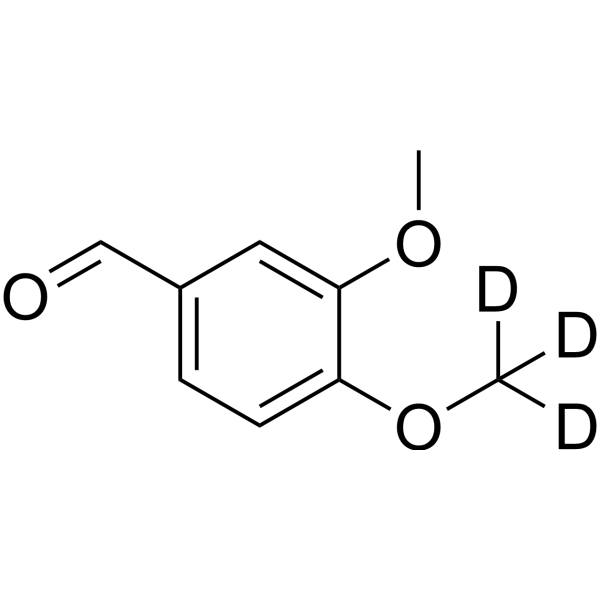 0 ImagesCat. No.: HY-N1096S1CAS No.: 143318-06-3Veratraldehyde-d3 is the deuterium labeled Veratraldehyde (HY-N1096). Veratraldehyde is an orally active aromatic compound and antibacterial agent. Veratraldehyde can be isolated from essential oils of plants such as peppermint and ginger. Veratraldehyde targets the PilY1 protein. Veratraldehyde has antibacterial activity against Pseudomonas aeruginosa. Veratraldehyde has a repellent effect against mosquitoes and ticks. Veratraldehyde can be used as a flavoring agent.
-
Chevalone C
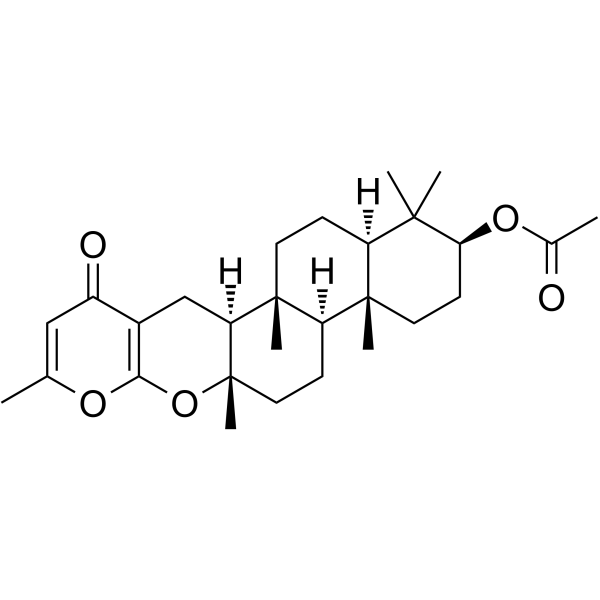 0 ImagesCat. No.: HY-120607CAS No.: 1318025-77-2



